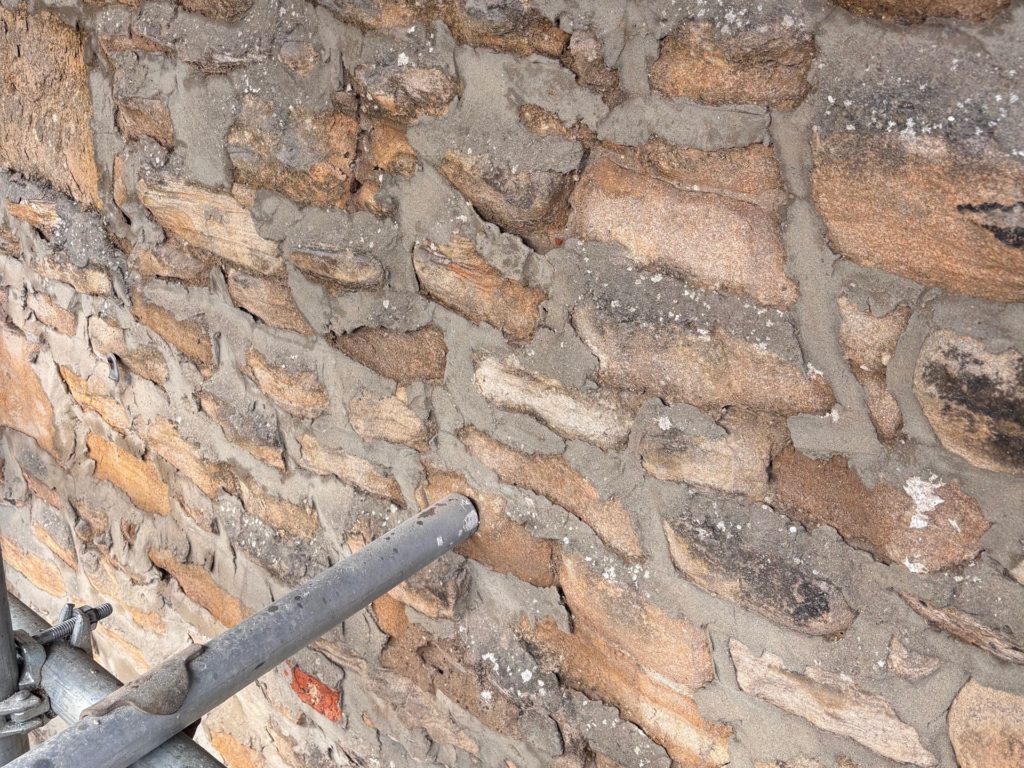
A well‑judged approach to pointing is one of the most important aspects of caring for natural‑stone buildings, because the mortar you choose directly affects how the wall performs, weathers, and sheds moisture.
Cement‑based mortars, although common in modern construction, are generally unsuitable for traditional stonework because they are far harder and less permeable than the surrounding masonry. When a rigid cement joint is introduced into a wall built to breathe, it traps moisture within the stone rather than allowing it to evaporate through the mortar bed.
Over time this imbalance leads to accelerated decay: stones begin to delaminate, salt crystals form behind the surface, and frost damage becomes far more severe. In contrast, lime‑based mortars work in harmony with natural stone by offering flexibility, vapour permeability, and a sacrificial layer that can safely weather without harming the masonry.
Understanding the difference is essential for anyone responsible for maintaining historic buildings, because inappropriate cement pointing can quietly cause more damage in a decade than the previous hundred years of exposure.
As conservation specialists, we see time and again that choosing the right mortar is not just a technical decision but a long‑term investment in the health and authenticity of the building.